The building
Building the basilica
How St Stephen's Basilica was built: József Hild's plan of 1851, the dome that fell in 1868, Miklós Ybl, József Kauser and the consecration of 1905.
Reserve a seat in the basilica ↗Quick answer
Building began in 1851 to József Hild's design. The dome collapsed in 1868, Miklós Ybl then reworked the church in Renaissance style, and József Kauser and the parish priest designed the interior after Ybl's death in 1891. The basilica was consecrated in 1905 and the keystone was laid in 1906 in the presence of Franz Joseph I.
A plan from 1851
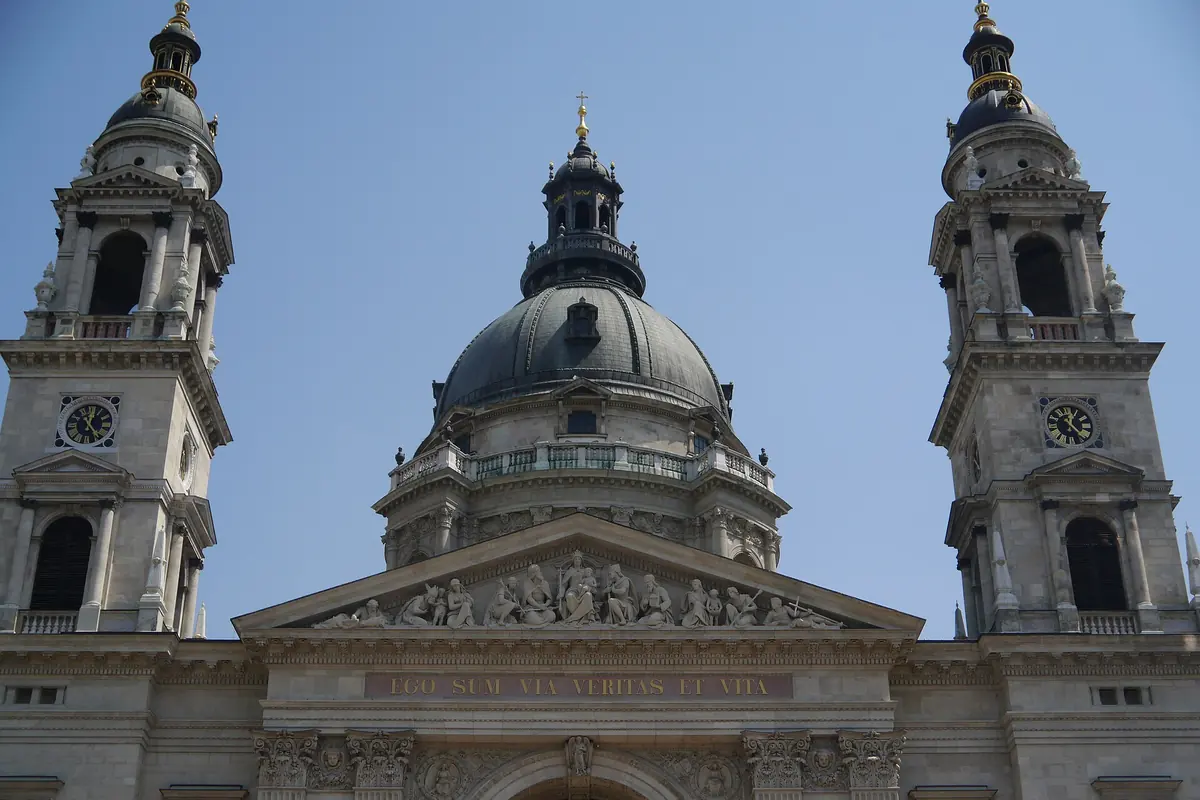
The basilica's own history says construction began in 1851 to designs by József Hild, in the classicist style of the period. Wikipedia calls it neoclassical and says Hild planned the church; Hild died in 1867. The concert ticket calls the building neo-classical, and later sources call the finished church neo-Renaissance, which reflects the change of plan described below. The church was first planned under the name of Saint Leopold, according to Wikipedia, and took its present name later. Wikipedia adds that construction lasted fifty-four years, a span that includes the rebuilding after the dome collapse.
The dome that fell
The basilica's history gives 1868 as the year the dome collapsed, one year after Hild's death. Wikipedia's article gives 1858, but the basilica's page is the better source for its own building and the date in this guide follows it. Wikipedia says the collapse required demolition and rebuilding from the ground up. It is one of the best-known facts about the church, and it helps explain why a building begun in 1851 took until 1905 to finish. The two dates in sources are a reminder to check a church's own history before repeating a number.
Ybl takes over
After the collapse, Miklós Ybl took over, corrected the design errors and reworked the church in Renaissance style, according to the basilica. That is why the building is often called neo-Renaissance, although the concert ticket calls it neo-classical. Both descriptions point at the same church: Hild's classical plan, Ybl's Renaissance revision. Wikipedia says the plan is a Greek cross and gives the dimensions as 96 metres high, 55 metres wide and 87.4 metres long.
Kauser and the interior
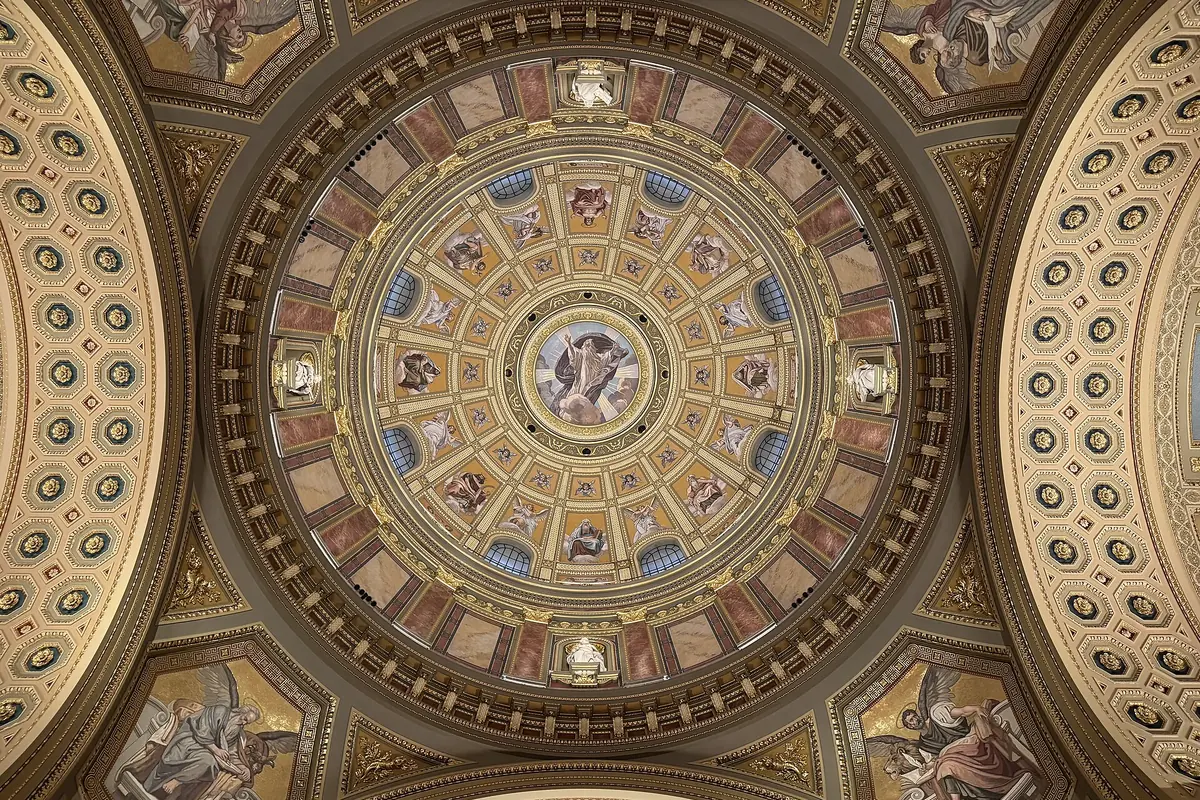
Ybl died in 1891. After his death, the architect József Kauser and the parish priest Lénárd Lollok designed the interior, the furnishings and the decoration under a single iconographic programme, the basilica says. The basilica's own pages credit Károly Lotz with the design of the main dome's mosaics and Gyula Benczúr with the half-dome behind the altar. Wikipedia credits Kauser with the pulpit and the canopy altarpiece, Alajos Stróbl with the statue of St Stephen and Miksa Róth with glass paintings. Mosaics, not the frescoes first planned, cover the dome and vaults.
The dome and the transept
Under the dome, the basilica says, stand white marble sculptures by Alajos Stróbl of St Gellért and his tutor St Imre, together with statues of saints of the House of Árpád, including János Fadrusz's St László, which the basilica calls Fadrusz's last work. The larger mosaics were made by the Venetian firm Salviati and the smaller ones by Miksa Róth of Pest. In the main dome, Károly Lotz designed mosaics showing the heavens with God the Father at the centre, and the four evangelists appear above the pillars that support it.
Consecration and since
The basilica says the church was named for St Stephen in 1897 and consecrated in 1905, and that the keystone was laid in 1906 in the presence of Franz Joseph I. A complete renovation ran from 1983 to 2003. Wikipedia adds that Pope Pius XI gave the church the title of minor basilica in 1931 and that it hosted the International Eucharistic Congress in May 1938. It suffered serious damage in the Second World War, according to Wikipedia.
Who this isn't for
A concert is not an architectural tour: the ticket covers the concert only, and the church hall, treasury and terrace are separate visits. If you want a single clean story, note that sources disagree on some dates, including the year of the dome collapse. If you want the pieces of music, the other guides on this site cover them. And if you only want the music, this history is background that deepens a visit but is not needed to enjoy the evening.
Frequently asked questions
When was the basilica built?
Construction began in 1851 and the church was consecrated in 1905, according to the basilica. A complete renovation ran from 1983 to 2003.
Who designed it?
József Hild designed it, and Miklós Ybl reworked the plan after the dome collapsed in 1868. József Kauser and Lénárd Lollok designed the interior.
Is it neoclassical or neo-Renaissance?
Both are used. Hild's plan was classical and Ybl revised it in Renaissance style. The concert ticket calls it neo-classical.
How tall is it?
Wikipedia gives 96 metres, equal with the Hungarian Parliament Building as one of Budapest's two tallest buildings.
Sources